Be sure you tailor your plan to the right scenario
Not all business plans are created equal. The way you approach your plan should depend heavily on your situation, your audience, and your funding needs. Whether you’re pitching a brand-new concept, launching a traditional startup, or pivoting an existing business, your strategy — especially around financial projections — must align with what your funding source expects.
Scenario 1: A New, Unproven Concept Seeking Equity Investment
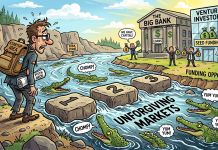
If you’re developing a product or service that doesn’t yet exist in the market, your business plan is primarily a persuasion tool for equity investors. In this case, investors are less focused on current performance (since there is none) and more focused on potential.
Your plan should emphasize:
- The problem you are solving and why it matters
- Market size and scalability
- Competitive advantage and innovation
- Your team’s ability to execute
Financial projections are still important, but they are directional rather than precise. Investors understand that early projections are based on assumptions. What they care about is whether your numbers tell a believable story of growth and scale.
Cash flow forecasts in this scenario demonstrate how much capital is needed, how long it will last, and when the business might reach profitability. Equity investors are often willing to accept higher risk in exchange for higher potential returns, so they may tolerate negative cash flow in the early stages — as long as the long-term vision is compelling.
Scenario 2: A Conventional Startup Seeking Debt Financing
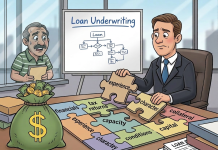
If you’re launching a proven business concept (like a restaurant, retail store, or service business), your audience shifts from investors to lenders, such as a CDFI. Here, the focus is not on innovation but on execution and risk management.
Your business plan should emphasize:
- Industry benchmarks and proven demand
- Location strategy (even if not yet finalized)
- Your experience and operational readiness
- Realistic startup costs and timelines
Unlike equity investors, lenders are not looking for upside — they are looking for repayment certainty. This is where financial projections, especially cash flow forecasts, become critical.
A lender will expect:
- Conservative revenue assumptions
- Detailed expense estimates
- A clear understanding of working capital needs
- Evidence that the business can generate enough cash to cover loan payments
Your cash flow forecast should show month-by-month how money comes in and goes out, including the timing of expenses and revenue. This helps the lender determine whether you might run out of cash before the business stabilizes.
Scenario 3: An Existing Business Pivoting for Growth
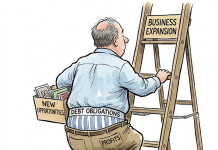
If you already have an operating business and are seeking financing to pivot — whether to enter a new market, purchase equipment, or expand — your business plan becomes a hybrid of history and forward strategy.
Your strengths include:
- A track record of revenue
- Established operations
- Historical financial statements
Your plan should focus on:
- Why the pivot makes strategic sense
- How the new opportunity improves revenue or efficiency
- What risks are involved and how they will be managed
For a CDFI lender, this is often the strongest position — but only if the projections are grounded in reality. Your financial projections must connect past performance to future expectations.
Cash flow forecasting is especially important here because it shows:
- How the new investment impacts operations
- Whether existing cash flow can support additional debt
- How long it will take for the pivot to generate returns
Why Financial Projections Matter
Across all three scenarios, financial projections — and especially cash flow forecasts — are essential. However, their purpose differs:
- Equity investors use projections to evaluate growth potential and scalability.
- CDFI lenders use projections to evaluate repayment ability and financial stability.
In simple terms:
- Investors ask, “How big can this become?”
- Lenders ask, “Will I get paid back?”
Understanding that difference is key to building a business plan that speaks directly to your audience — and ultimately helps you secure the funding you need.