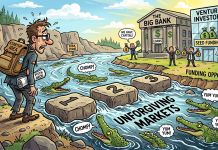
Many small business owners look back to a time when securing financing felt straightforward: call your banker, explain your needs, and walk away with a deal. But that era has changed — dramatically. In Small Business As Usual 19-7: Why Borrowing Got Hard, CEDF’s Jim Bzdyra reflects on how commercial banking and lending practices have evolved over decades, and why traditional borrowing is now more complex for small business owners.
What Changed in Small Business Lending
1. A Shift in Banking Practices
In earlier decades, banks often prioritized relationships and local business knowledge. A business owner could have a conversation with a lender who truly understood the community and the company’s story. Over time, however, the banking industry became more centralized, data-driven, and risk-focused. Lenders now rely heavily on formal credit criteria, automated systems, and standardized underwriting practices. Decisions that once might have been made based on relationship and context now often hinge on algorithms and strict risk profiles.
2. Tighter Underwriting Standards
Another key factor in the growing difficulty of borrowing is the tightening of underwriting standards. Since the financial crisis and evolving regulatory pressures, lenders seek more documentation, stronger financials, and clearer repayment capacity. Micro and smaller loans — precisely the type many new or growing businesses need — may be seen as less profitable or higher risk for large lending institutions. As a result, business owners often find it tougher to qualify for even modest borrowing amounts.
3. A More Risk-Averse Environment
Banks today face heightened expectations from regulators and investors to minimize defaults. This risk aversion has a direct impact: lenders often favor established businesses with long financial histories, strong cash flows, and high credit scores. Newer or smaller businesses — even those with solid ideas — can be filtered out early in the process because they don’t yet fit the ideal risk profile.
Current Best Strategies for Getting a Business Loan
So what does this mean for your business? If lending has changed, your strategy must evolve too. Here are some of the best practices to increase your chances of approval:
1. Get Your Financial House in Order
Lenders today want transparency and accuracy. Make sure your financial statements — profit and loss, balance sheets, cash-flow forecasts — are up-to-date and organized. Strong financial records not only paint a clearer picture of your business but also signal professionalism and discipline to underwriters.
2. Prepare a Clear Narrative
While data matters, context still counts. Prepare a concise story about your business: what you do, where you are headed, how you plan to use borrowed funds, and how that investment will improve performance. A compelling narrative bridges the gap between cold numbers and real potential.
3. Build Your Credit Profile
Your personal and business credit histories play a key role in modern underwriting. Proactively improving your credit scores — by paying bills on time and managing existing debt responsibly — can significantly improve your loan prospects.
4. Understand What You’re Asking For
Different financing products serve different purposes. Lines of credit are ideal for managing working capital, term loans support growth projects, and owner-occupied commercial mortgages help with real estate investment. Tailor your request to the right product and clearly articulate how it fits your business strategy.
5. Cultivate Multiple Lending Relationships
Relationships still matter — especially with community lenders, credit unions, and nonprofit organizations like CDFIs. These institutions often take a more holistic view of your business and can help guide you through the process. By maintaining multiple contacts, you also increase your access points to capital.
Conclusion
Borrowing hasn’t become impossible — it’s just more rigorous. By understanding how lending has evolved and preparing accordingly, business owners can still achieve successful loan outcomes that support growth and long-term financial health.